- The Long tail (Chris Anderson)
- Paradox of choice (Barry Schwartz)
- New age of innovation (C.K. Prahalad & M.S. Krishnan)
- The tipping point (Malcolm Gladwell)
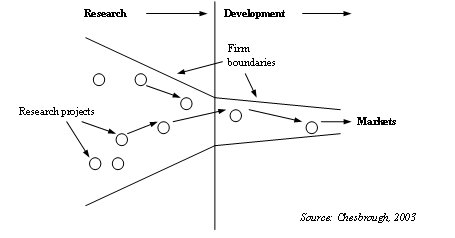
- Open Innovation (Henry Chesbrough)
- Blue ocean strategy (Kim & Mauborge)
- Purple Cow (Seth Godin)
- The starfish and the spider (Ori Brafman & Rod Backstrom)
- Tribes (Seth Godin)
- The future of competition (C.K. Prahalad & Venkat Ramaswamy)
Sunday, November 15, 2009
10 concepts you should understand to survive the digital revolution
Monday, February 9, 2009
Attention! Future Music models without ads
Monday, January 26, 2009
Ups and Downs: business model innovation
A consortium of Dutch researchers published a report on 'filesharing and the economic impact on the Dutch creative industry'. One of the suggestions of the researchers is innovating business models. Earlier, I shared with you the presentation of Alex Osterwalder about business model innovation. Alex and the researchers are suggesting the same types of innovations. Innovation of value chains into value networks, innovation of distribution and markets. Page 136 of the report 'Ups and downs':"The only way to cope with the impact of file sharing is to develop new connections and networks to support new products and services'. It seems like a strategy of lawsuits and DRM is not the right way to act. Next to this the market size of legal music downloads isn't generation the same amount of revenues as the decline of the music market." 'The industry is in a forced phase of transition"
Part of this transition is the entrance of new companies into the value network. Companies like Nokia and Apple are taking the lead in constructing new products, services and connections. It is really 'innovation time' for the traditional music companies. Otherwise the new entrants will take over their business.
Monday, January 19, 2009
Music, Beer & innovation
Last Saturday, 17 January 2009 a meeting of Beer and innovation was held in Groningen, The Netherlands. The idea of beer and innovation meetings is to connect professionals and start-ups with each other. The start-ups will pay the drinks, the professionals will share their knowledge. The meeting in Groningen was initiated by Lopend Vuur and was all about music start-ups. Not really a coincidence because during the weekend the European music conference Noorderslag / Eurosonic was held. The following start-ups were presenting themselves at the meeting: Twones, Cloudspeakers, Tipspot, Tribe of Noise, Next best band, New music labs (tools for tribes). Conclusion after some beer and an inspiring conversations: we have a lot of innovative upcoming / promising Dutch start-ups which are using music as one of their core activities. The Netherlands is ready to create and facilitate more music tribes!
Monday, January 12, 2009
3 reasons why an artists still needs support of intermediaries

In the age of web 2.0 the music industry value chain is changing. Traditionally, intermediaries like record companies, music publishers, copyright societies and record stores are supporting the author and artist to create, market, distribute and sell their works. Nowadays social networks are providing powerful tools to both artist and consumers. Artist can upload and share their works with consumers. Consumers can find, share and consume this content. Most of the time for free. (or feels like free) The question arises if the artist still needs the intermediaries these days? I will give you 3 reasons why intermediaries are still adding value.
Sunday, December 21, 2008
You Tube and the content of major record companies
The You Tube team announced that music video's of Warner Music are no longer available on You Tube. The Washington post published the statement of Warner Music:Sunday, November 23, 2008
Event: Entertainment & Rights
'Entertainment & Right' was held on 21 November 2008 @ Holiday Inn in Amsterdam. The following topics were discussed:- Dutch Media Law which will be updated soon
- Artists & Taxes
- Duration of Neigbouring Rights within the European Union
- 360 degree artist contracts
- New licensing model of Dutch music copyright organisation Buma/Stemra
Wednesday, November 12, 2008
Can a song of 10 minutes be seen as a product innovation?
Did you realize that the length of a 'mainstream song' of the traditional recorded music industry is approximately 3,5 minutes? Do you know why? I think there are two main reasons:Technology. The length of songs were based on a combination of the capacity of sound carriers and the quality of the recording.
In theory 'traditional songs of 3,5 minutes' will be history within the digital environment. The length of a musical work is becoming less important.
Marketing. There are far more digital music providers than traditional radio stations. Listeners stick to digital music providers because of the uniqueness of the content. No more - middle of the road stations only - but niche markets. Every music lover can listen to his own music taste. It simple doesn't matter if the length of the content is a little longer.
Technology. It just doesn't matter if the data storage of the content is a little more. Storage capacity is almost endless these days.
Friday, November 7, 2008
First Dutch hiphop businessclass
On 1 november 2008 the first Dutch hiphop businessclass was held @No Limit in Amsterdam. Speakers of Telegraaf Media, Radio 538, Rockacademie, Buma/Stemra, 3time and Netlog told Dutch Hiphopartists how the business side of the Music Industry works. How do you get your music on the radio? Do you really need a record company? How do you clear copyrights? Do you need permission of right holders when you use samples in your song? How can you use social media to get in touch with your fans? Next to the various presentations professional hiphop artists provided hiphop workshops to improve your skills as MC / Hiphop artist. Monday, November 3, 2008
How to start a legal digital music service

If you like to start a digital music service you just can't start sell music on your website that you bought on another digital music service like iTunes, or even worse, ripped from a cd or from a peer2peer service. Why not? Because it is not your music. The creators of the music, authors and artists, own the music. If you like to sell their music you need their permission. Creators have various rights. Rights to exploit the music. If you like to sell the music of the creators you have to pay a (small) amount of money to them.
Clearing copyright and neigboring rights
Within the Netherlands you have to pay the author based on the copyright act of 1912. The artist (performer) has to be paid based on the neighboring rights. But, how can I find these artists and authors? And, how much do I have to pay them?
Most of the time artists and authors are supported by organizations to market, finance, distribute and sell their music. Music Publishing companies are supporting authors, Record companies are supporting artists. The relationships between artists and record companies and authors and music publishers are based on record deals and publishing deals. The creators are (partly) transferring their rights to these parties. It means that record companies and music publishers are becoming rights holders as well.
The role of the copyright society
Another party is involved. The copyright society. Music Publishers and authors can transfer the exploitation of their copyrights to a copyright society. The copyright society charges music users for the use of music based on the copyrights of the rights holders they represent. So, when you like to start a digital music service, you have to start to get a license from a copyright society. This was the easy part of the story.
Get licenses from the 4 major recordcompanies to cover 80% of total market
To get a license from a record company (because of the neighboring rights) you have to make deals with several record companies to clear the rights. It is not possible to clear your rights with one organization. You have to start negotiations with various record companies. The four major record labels (Sony, Warner, Universal and EMI) have an accumulated market share of 80%. To have a successful (mainstream) music service, you need the content of the four majors in order to survive this highly competitive market.
Conclusions
So, if you like to start a digital music service: clear copyrights and neighboring rights. Copyrights can be cleared via copyright organizations, neigboring rights need to be cleared via record companies. Start with the major labels. Clearing rights can be a time consuming and an expensive process.
Wednesday, October 29, 2008
8 feels like free music business models
Consumers are getting more and more confused. Free music is everywhere, but is it legal music? And, is it really free? Or are you paying your music in a different way than you did before? Or is a third party financing this music? I have identified 8 'music feels like free models' for you. Some models are still great innovations, other models are becoming more mainstream.
1. Advertising funded

Some music models are advertising supported. Examples of this businessmodel are Fabchannel, Spiral frog or We7. Advertsing income is used to cover the costs of music. Advertising can be served in various ways. Instream advertisements, bannering, buttons, pre-rolls or postrolls. The radio and television industry is using the advertising model for years. For the (digital) music industry this model is relatively new.
2. Mobile music subscription model
Examples of this model are TDC in Denmark and Nokia's Comes With Music. Consumers are buying a handset with music included. The price of the handset includes the price of the music. When you download the music from a music store to the handset you don't have to pay. It feels like free. The innovative part of this model is the role of Nokia. Handset manufacturer Nokia is entering the music industry to sell more mobile phones and deliver more services to their end users.
3. Music tax
Media futurist Gerd Leonhard has written a lot about his 'music as water' music model. According to Leonhard 'music tax' should be paid to a governmental institution for the use of music. An independent party should distribute the collected money to the rightholders. A lot is said about this model. One thing is sure: this model can be a future solution, not a solution for 2008. The various governments and rightsholders are not ready yet to implement this model. ‘Tax’ is not innovative, a music tax is!
4. Levies
This 'music feels like free' model is slightly different from the 'tax' model. Levies could be collected based on Internet access, mp3 players and / or other devices. Levies are collected by public organizations instead of governmental institutions.
5. Brands
Bacardi is using 'music' for marketing purposes. Some artists have record deals with brands like Bacardi.
6. Piracy
A lot of music is shared via p2p networks. This music is not licensed by copyright- and / or neighboring right holders.
7. Creative Commons
"Creative Commons provides free tools that let authors, scientists, artists, and educators easily mark their creative work with the freedoms they want it to carry. You can use CC to change your copyright terms from "All Rights Reserved" to "Some Rights Reserved."
Creators of musical works can use Creative Commons licenses to show the world if it is allowed to use or remix the musical work and distribute it. Traditionally, copyright societies are taking care of collecting and distributing royalties for the use of music. Creative commons isn’t collecting and distributing any money.
8. Promotions
Sometimes artists are giving away their music for free. To promote their music, to promote their gigs and to let the world know about their amazing music.
Saturday, October 4, 2008
The rise of the all-you-can-eat mobile music model

This week Nokia has unveiled the Comes with Music service for the United Kingdom. It launches on the 16th of October 2008. This all-you-can-eat service provides unlimited access to music via your Nokia phone. Sony-Ericsson is offering a similar service: Play now plus. Are this innovative services? Who are profiting from these services? Time to discuss this music model.
Is this service an innovative music model?
According to Wikipedia 'innovation' means a new way of doing something. But, is this kind of service new? Five months ago the Danish Telco TDC launched a similar music service called 'play'. So, not completely new, but almost. The subscription part of this model isn't new either. eMusic offers a subscription model as well. This model is ad supported and 'feels like free' for consumers. Another subscription model is 'Planet music' a music service of KPN within the Netherlands. Consumers are charged to use this service. So the subscription and ' feels like free' part are not innovative any more. Maybe the 'DRM free' part is a new element? This service is still a walled garden according to blogger David Gerard. Although, this music model is not an innovation, I think you can call it innovative from a rights holder’s perspective. Siliconrepublic.com reports that all the major music labels and major publishers are supporting this service.
Who is profiting from this music model?
This brings me to the next question: Who is profiting from this music model?
- The consumer?
- The Telco’s and mobile phone manufacturers?
- The rights holders?
They all are profiting!
- The consumer is finally offered a new music model to consume and discover music,
- The Telco’s and manufacturers are hoping to increase sales of the devices and data transmission
- The rights holders are generating new income streams from giant multinationals which are using the content of the rights holders to increase sales by increasing customer (music) experience
But, are consumers really shifting away from P2P networks with this service? Or is this service cannibalizing the sales of other legal music services like iTunes or Beatport? At least it is a nice try and a positive next step for the music industry when it comes to music innovation.
Sunday, September 28, 2008
Five Characters of Social Marketing
Wednesday, September 24, 2008
Open Innovation and Co-creation
- The networked world allows us to bring customers into the lab as a co-producer.
- The smart people you need to innovate aren't members of any single team but are distributed all over the place in multiple institutions. Finding successful ways to work with them will lie at the heart of innovating innovation

Tuesday, September 23, 2008
The Long Tail & Profitability
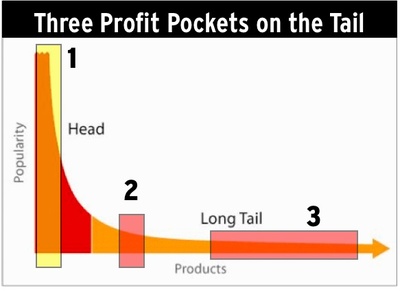
"The theory of the Long Tail is that our culture and economy is increasingly shifting away from a focus on a relatively small number of "hits" (mainstream products and markets) at the head of the demand curve and toward a huge number of niches in the tail. As the costs of production and distribution fall, especially online, there is now less need to lump products and consumers into one-size-fits-all containers. In an era without the constraints of physical shelf space and other bottlenecks of distribution, narrowly-target goods and services can be as economically attractive as mainstream fare.’
'Seth Godin has been exploring Chris Anderson's idea of the The Long Tail. As usual Seth brings clarity and illumination to this often misunderstood notion. He recently posted a dissection of the three "profit pockets" within the Long Tail, which he illustrated like this:

There's a blatant switcheroo that Seth (and almost everyone else) makes when explaining the Long Tail. In pocket #1 of the curve, Seth talks in terms of a creator of a work. In pocket #2 of the curve, he also talks in terms of the creator. But then when he gets to the long tail, he switches away from a creator, to talk in terms of an aggregator of other creators' work. Why is that? What happens to the creator? The creator is dropped when we get to the long tail "pocket of profit" because the long tail is not profitable for the creator. It's profitable only for the audience and aggregators.'
Sunday, September 21, 2008
Digital Revolution
Covey then talks about four different ages in which 'change' occurs:
1. The hunter and gatherer age
2. The agricultural age
3. The industrial age
4. The information knowledge worker age
For instance, in the industrial age people build factories and learned specialization, delegation and scale ability. 'The productivity of the industrial age went up fifty times over the family farm. What did you need as a farmer to stay a player, also in the industrial age? You needed a completely new skill set and toolset. You needed a new mindset, a new way of thinking.'
I think this story is also true for the music industry these days. The information knowledge worker age is changing the way consumers are behaving. Buying music, listening to music, finding new music, and so on. The music industry must realize that people are finding new music via Peer-2-peer networks, Pandora, Last.fm, and other services. Consumers are not buying music the way they bought music ten years ago.
Monday, September 15, 2008
10 New Marketing Classics Every Researcher Should Know About
Thursday, August 28, 2008
Music as a commodity
Music Lovers have access to too much music. It takes too much time to find a song on your MP3-player, at your computer or in your library. And, if you found the song you were looking for, you are getting impatient and can’t wait until the next song starts. It is just too much to handle. A business model that is based on a great Customer Experience will be a huge opportunity. The right music at the right time at the right place. But how do we get there? I think (and hope) that Last.fm and Pandora are just the start of the ‘discovery’ music model.
Saturday, November 24, 2007
Changing Music Industry
Sunday, September 16, 2007
Hoe het crossmediale verhaal van 'Sophy de band' verder zou kunnen gaan...
Gisterenmiddag was het optreden van Sophy, de band waarover ik schreef in mijn vorige bericht. Naast het schrijven van mooie liedjes en het geven van spetterend optredens is Sophy nog ergens goed in: het vergroten van de 'fanbase' door een crossmediale campagne in te zetten.Volgens Monique de Haas, crossmedia expert, is crossmediale communicatie het volgende:
"Bij crossmedia-communicatie nodigt het verhaal de gebruiker uit om een cross-over van het eerste medium naar het volgende te maken." Verder stelt zij: "Doordat de gebruiker er zelf voor kiest om van het eerste naar het volgende onderdeel van het verhaal te gaan binnen hetzelfde dan wel een volgend medium, neemt de betrokkenheid bij de boodschap toe. Het aantal contactmomenten breidt zich uit en het verhaal kan op diverse niveaus tegelijk worden verteld."
Sophy zet diverse media op briljante wijze in met als doel om de betrokkenheid van de fans te vergroten. En met succes! Mede door het inzetten van het You Tube filmpje was de Heeren van Aemstel behoorlijk gevuld! Er is dus door velen een goede crossover gemaakt van de Hyves pagina van Sophy (internetlokatie) naar de Heeren van Aemstel (fysieke lokatie). Mooi detail: het stuk karton dat in het filmpje werd gebruikt om liftend naar het optreden te komen stond tegen het podium.
Het bord zou als een mooi 'encounter point' gebruikt kunnen worden in het verhaal van Sophy. Tijdens een masterclass over Crossmedia dat door het Lectoraat Media & Entertainment management georganiseerd werd sprak Monique de Haas over 'encounter points', het moment waarop je mensen onbewust laat meenemen in jouw verhaal. In dit geval het verhaal van Sophy.
Idee: gebruik het bord om het verhaal van Sophy te vervolgen en daarmee de betrokkenheid van de fans te vergroten: Laat de fans van Sophy een mooie foto maken waarop zij liftend te zien zijn naar het volgende optreden van Sophy op 11 november 2007 in Haarlem. De winnaar wordt bijvoorbeeld door de heren van Sophy thuis opgehaald en naar het optreden in Haarlem gebracht... Vanzelfsprekend wordt het vervolg van het verhaal weer gebruik gemaakt van verschillende media: filmpjes, Hyves en de internetsite van Sophy!
Saturday, September 8, 2007
Marketing door de artiest in de lift!
Monday, July 23, 2007
De functie van platenmaatschappijen (deel 2)
1. A&R,
2. Legal & Business,
3. Sales, merchandising en distributie,
4. overige functies.
Een wonderlijke indeling. ‘A&R’ is duidelijk. ‘Sales, merchandising en distributie’ zijn duidelijk verschillende zaken. ‘Overige functies’ is altijd handig in een opsomming, kan je in ieder geval nooit iets vergeten. Het blijft dus eigenlijk vaag wat nu de functie van een maatschappij is.
In mijn zoektocht naar de 'echte' functie van een platenmaatschappij stuitte ik op aantekeningen die ik maakte tijdens een gastcollege (Media & Entertainment Management, 1999) van Stef Collignon, op dat moment in dienst van Universal / Polydor. In de toelichting van de toenmalige organisatiestructuur van Universal werd nagenoeg hetzelfde rijtje gebruikt. Het lijkt wel alsof de ‘functies’ uit Artiest en Recht geen functies zijn maar ‘afdelingen’ van een major platenmaatschappij als Universal. Op het verschil tussen een major en independent kom ik later terug.
Na mijn bronnenonderzoek en de bovenstaande constatering stel ik daarom voor de volgende indeling van functies te hanteren:
1. zoeken naar artiesten & muziek (A&R)
2. financieren van artiesten & muziek
3. marketing van artiesten & muziek
4. distributie van artiesten & muziek
5. exploitatie van verworven eigendomsrechten
In de bovenstaande opsomming houd ik rekening met zowel majors als independents. Bovendien is deze indeling meer generiek en spelen zowel de artiest als de muziek een rol.
De laatste functie lijkt steeds meer voor te komen in de digitale muziekindustrie; de platenmaatschappij als ‘content aanbieder’.
Monday, July 16, 2007
Muziekindustrie waardeketen

Omdat in mijn onderzoek mogelijke innovaties voor platenmaatschappij centraal staan, is het van belang eerst te begrijpen welke partijen in de traditionele muziekindustrie actief zijn en wie welke rol vervult. Vaak wordt ook een poging gedaan om partijen uit de online muziekindustrie in een dergelijk model op te nemen. Wat mij betreft is de online muziekindustrie een andere waardeketen waarbij een aantal partijen ook in de traditionele waardeketen van fysiek product aanwezig zijn. Het zijn naar mijn idee dus verschillende modellen. De modellen van de ringtone waardeketen en de online waardeketen zal ik binnenkort ook op deze blog weergeven. [klik op het model voor een groter formaat]